Filing IRS Form 14039 When Someone Files a Tax Return in Your Name
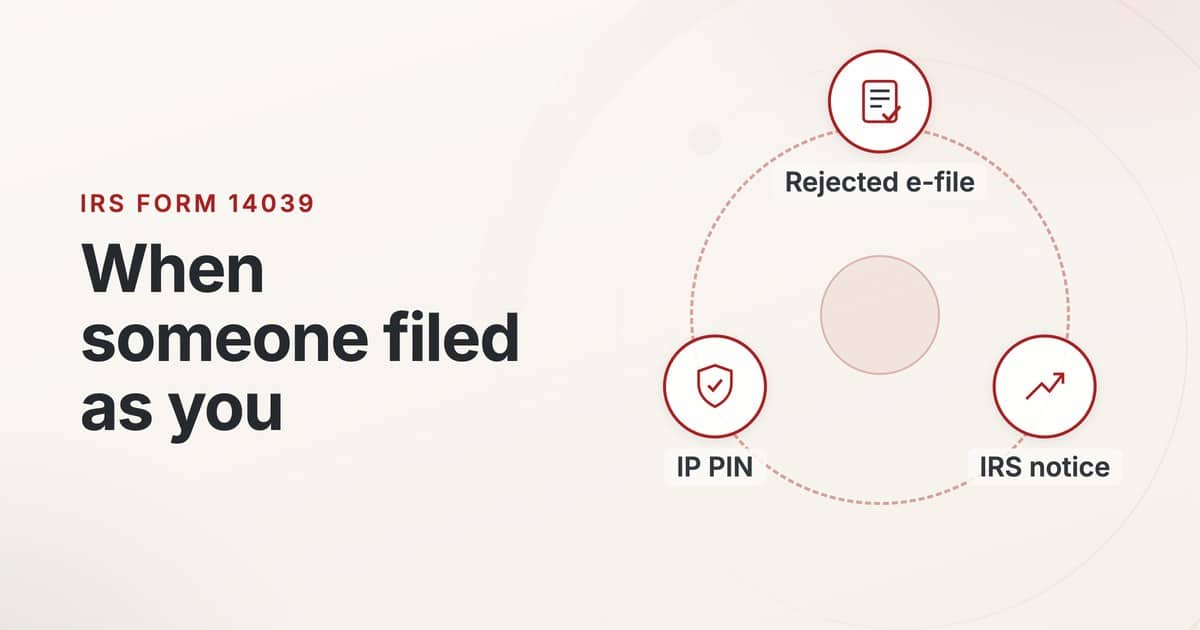
An e-file rejection is how most people find out. The return goes in, comes straight back, and the reason code says a return has already been filed using that Social Security number. Nobody in the household filed it. Somewhere in the message is a form number, and that form is 14039.
Before anything else, do not file a second copy of anything, and do not assume the refund is gone. Call our Naperville office at 331-215-7663 or reach us through our Contact page if you want someone to work it with you.
What Form 14039 Does
Form 14039 is the IRS Identity Theft Affidavit. It is a signed statement, made under penalty of perjury, that someone has used your Social Security number or ITIN on a federal tax return or for employment. Filing it opens a case with the IRS unit that specializes in identity theft, gets the fraudulent return taken off your record, and puts a protective marker on your tax account.
When You Need It and When You Do Not
This is the part worth getting right, because filing the form when the IRS has already opened your case slows the case down rather than speeding it up.
Your E-Filed Return Was Rejected as Already Filed
This is the clearest case for the form. Your return was blocked because a return using your number was already accepted, and you know it was not yours. You file on paper, attach Form 14039 to the back of the paper return, and send it to the address where you normally file. The affidavit and the real return travel together.
You Got an IRS Notice About a Return You Never Filed
Also a clear case, with one change of address. If you are responding to an IRS letter or notice, check the box in Section A that says so, write the notice number on the line, and return the form to the address or fax number printed on that notice rather than to the general address. Nothing causes these to sit unworked more often than sending the form to the general address when a notice gave you a specific one.
When the IRS Has Already Opened the Case for You
If a letter arrives from the Taxpayer Protection Program, the answer is different. Letters 5071C, 4883C and 5747C are the IRS telling you it has already flagged a suspicious return in your name and wants you to verify your identity. In that situation the IRS instruction is explicit, and it is not to file the affidavit. Verify through the online tool or the number in the letter, tell the IRS whether the return was yours, and the case proceeds from there. The IRS guide for identity theft victims sets out the steps for each version of this.
There is a third situation people file into by mistake. If your circumstances are not tax related, the affidavit is not the right instrument. Report the theft to the Federal Trade Commission and request an Identity Protection PIN to protect the tax account.
How to Fill Out Form 14039
Section by Section
Five sections are required, and the form is shorter than its reputation.
Section A asks who you are filing for, yourself or someone else, and whether you are responding to an IRS notice. Section B is how you were affected, and it is the section that decides what the case is about. The three boxes cover a fraudulent return filed with your information, you or a dependent claimed incorrectly on someone else’s return, and your number used for employment. Section B also carries a free text box asking for the explanation, the impact on your tax account, when you became aware of it and the relevant dates.
Section C is your name and contact information, including the address used on your last filed return if it differs from where you live now. Section D is the tax account information, meaning the last return you filed and the years you believe were affected, with Unknown as an accepted answer. Section E is the signature. If you are filing on behalf of someone else, Section F adds the authority, and that is where a Form 2848 power of attorney or a conservator appointment is recorded.
The Documents to Attach
The paper route allows attachments. Keep them readable and keep them relevant. That usually means the notice you received, a copy of the return that was blocked if you have it, and proof of your identity where the form asks for it. If you are filing for a deceased taxpayer, the attachments depend on which box you check, and a surviving spouse filing needs none at all.
Do not send the original tax return to the identity theft address. That goes to the service center where you normally file.
Does It Need to Be Notarized
No. Section E is a penalty of perjury declaration, which is why a signature is sufficient and a notary is not part of the process. Nothing on the current form asks for one.
Can You File It Online
Yes, and the IRS now calls the online route the preferred one. The affidavit can be completed and submitted through the form’s own page at irs.gov/dmaf/form/f14039.
The tradeoff is stated on the form itself. Attachments are not available through the online submission, so anything you need the IRS to see alongside the affidavit has to go another way. Choose one method and only one. Submitting the same affidavit online and by mail creates duplicates, and duplicates cause exactly the delay you were trying to avoid.
The paper route mails to the IRS in Fresno, California, unless a notice gave you a different address, and there is a toll free fax line for cases where a notice provides no fax number of its own. Both are printed on the reverse of the form.
After the Affidavit Goes In
IRS Processing Time
Your case goes to the Identity Theft Victim Assistance organization, where an employee with specialized training works it. The IRS says a resolution letter is generally issued within 120 days, then states plainly that inventories rose after the pandemic and on average it is taking 580 days to resolve identity theft cases, which it publishes on its victim assistance page.
That figure is worth reading before you plan around a refund. You can see how far behind the queue is on the IRS processing status page, which lists the month of receipt currently being worked. As of late August 2026 it showed Form 14039 submissions received in May 2025.
The other instruction that matters here is not to chase it. The IRS asks you not to submit a duplicate affidavit and not to call about the status, because both create work that pushes the case further back.
The IP PIN That Follows
Every confirmed victim of tax related identity theft is placed into the Identity Protection PIN program and issued a new six digit PIN every year, and it has to be used on all future filings. You do not have to wait to be a victim to get one. Anyone can request an IP PIN through an IRS online account, and no single step a household can take does more to stop this happening in the first place.
What to Do if the Balance Is Still Showing
Cases resolve in stages, and account transcripts do not always keep up. If a balance from the fraudulent return is still on the account after the resolution letter arrives, that is a transcript question rather than a new identity theft question, and it is worth pulling the transcript before responding to anything. Our post on what each IRS collection notice means explains which notices carry deadlines you cannot let pass while a case is open.
If the Fraudulent Return Created a Balance You Are Being Billed For
This is where an identity theft case becomes a collection case, and the two run on different clocks. The identity theft unit is working the record. The collection side of the IRS is working the balance, and it does not pause on its own because an affidavit is on file.
If a CP14 balance notice or a CP2000 underreported income notice has arrived on income you never earned, both need a response inside their own deadline, in writing, referencing the open identity theft case.
As enrolled agents we can file the authorization and deal with both sides of the IRS on your behalf, which is usually the point at which this stops eating a household’s evenings. Our About Us page has the team and the credentials.
Our service areas page covers the collection work that follows when a fraudulent return leaves a balance behind.
Where to Start if Your Return Was Rejected
Work in this order. Confirm whether the IRS has already contacted you, because a Taxpayer Protection Program letter changes the answer entirely. If it has not, file your real return on paper with the affidavit attached. Request an IP PIN for everyone on the return. Then watch for collection notices on a balance that is not yours and answer each one inside its deadline.
Bring us the rejection notice and any IRS letters in a Free Confidential IRS Case Evaluation and we will tell you which track you are on and take the correspondence off your hands. Call 331-215-7663 or reach us through our Contact page. You’ll Leave With a Clear IRS Action Plan – Whether You Hire Us or Not. Amit Maheshwari, EA (Enrolled Agent, Licensed to Practice before the IRS).
FAQ
What does the IRS form 14039 do?
It is the Identity Theft Affidavit. Signed under penalty of perjury, it tells the IRS your Social Security number or ITIN was used on a return or for employment, opens a case with the identity theft unit, and puts a protective marker on your tax account.
Can you file a 14039 online?
Yes, and the IRS treats online as the preferred method. The one limitation is that attachments cannot be sent that way, so a case that needs documents alongside the affidavit goes by mail or fax instead. Never use two methods for the same affidavit.
Is form 14039 required to get a refund?
Not by itself. The affidavit opens the identity theft case; the refund is released when the IRS has processed your real return and removed the fraudulent one. If the IRS contacted you first through a Taxpayer Protection Program letter, verifying your identity is what moves the refund, not the form.
Should I file form 14039 if someone used my tax info?
If a federal return was filed with your information, or your number was used for employment, yes. If the IRS has already written to you about a suspicious return, follow that letter instead. If the misuse is not tax related, report it to the Federal Trade Commission and request an IP PIN.

Written by
Amit Maheshwari, EA (Enrolled Agent, Licensed to Practice before the IRS)
Tax Resolution Specialist at Taxx Resolution Inc
Amit is an Enrolled Agent credentialed with the IRS. As a seasoned Entrepreneur, he brings a wealth of experience and a commitment to assisting small businesses in achieving financial peace of mind. From IRS disputes and audits to tax debt resolution, he helps alleviate the burdens that can impede the growth and success of businesses. With a keen understanding of tax laws and regulations, he strives to provide solutions specific to the client's situation.
Need Help With Your Tax Situation?
Book a no-obligation tax resolution case evaluation with a licensed tax professional.
Case Evaluation
Book a no-obligation tax resolution case evaluation with a licensed tax expert today.
(331) 215-7663