Answering an Illinois Department of Revenue Notice of Deficiency Within 60 Days
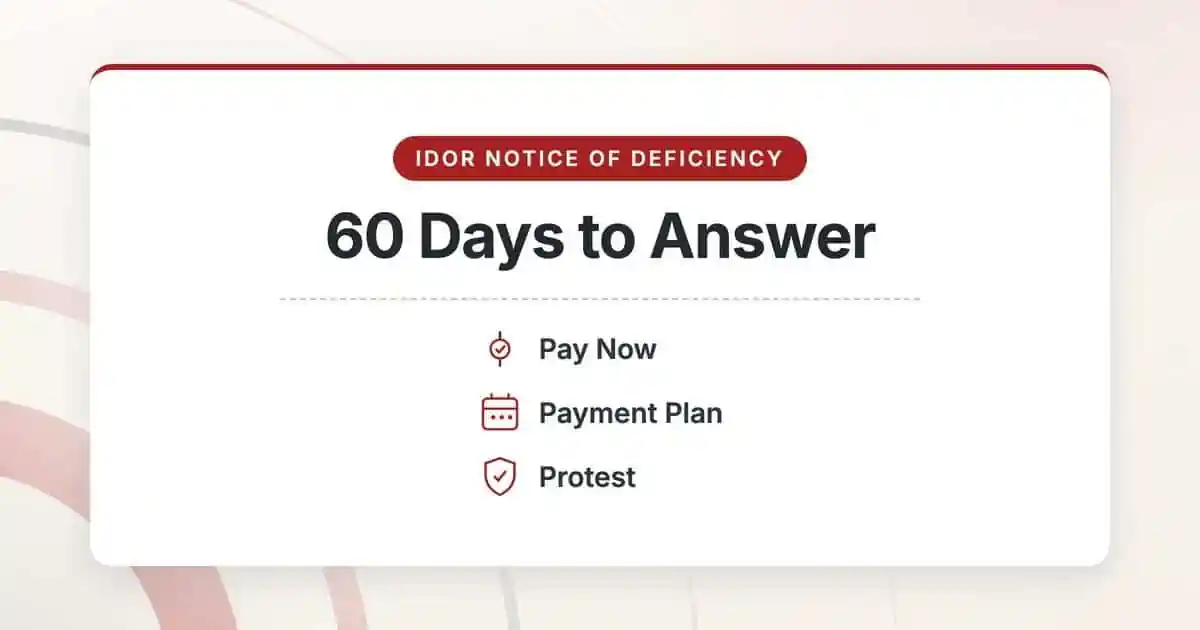
A Notice of Deficiency from the Illinois Department of Revenue says the department believes you owe more income tax than your return showed, and it lists the tax, penalties and reasons. You have 60 days from its issue date to protest, or 150 days if you’re outside the United States. After that, it becomes a final assessment.
The 60 days run from the date the notice was issued, not the day it reached your mailbox. A notice that sat on the counter for two weeks has already used up part of the window.
Send it to us while there’s time to act. Call 331-215-7663 or reach us through our Contact page and we’ll read it with you.
What the Notice Is
It’s the department’s formal proposal to assess more tax. Under section 904 of the Illinois Income Tax Act (35 ILCS 5/904), IDOR examines a return after it’s filed, and when it finds the tax shown is less than the correct amount, it issues a notice of deficiency setting out the tax and penalties it proposes to assess. The notice has to list the adjustments behind that figure and the reasons for them.
IDOR also issues one when no return was filed, using its best judgment of the tax due. Its letters and notices page lists the individual income tax version as LTR-393-IPD and says an unpaid one may be referred to the department’s collections unit.
Why Did I Receive a Notice of Deficiency?
You received one because IDOR decided the Illinois income tax on your return was understated, or because it estimated tax for a year you didn’t file. The adjustments section tells you which. Each adjustment names something the department changed and why, and those adjustments are what we check first against your return and the records behind it.
If your letter says Notice of Proposed Deficiency and came after contact from IDOR’s Audit Bureau, you’re at an earlier stage. IDOR’s dispute options page says a proposed notice can go to its Informal Conference Board for review within 60 days.
A Proposed Assessment Becomes Final After 60 Days
The tax and penalties on the notice are proposed, not yet assessed. Section 904 says that 60 days after it’s issued, the notice becomes an assessment of everything on it except amounts you’ve protested. Section 908 (35 ILCS 5/908) applies the same deadline to a protest or a petition, with 150 days for a taxpayer outside the United States.
Paying early has its own effect. IDOR’s audit guide, PIO-60, says a payment of Illinois tax is considered assessed on the date it’s received and may affect your right to contest the amount, unless it’s a payment under protest.
Three Ways to Answer It
If the figures are right, the notice can be paid, or spread over an IDOR payment plan when paying in full isn’t realistic. IDOR’s letters page asks taxpayers to respond by the due date to limit added interest and penalties.
If the figures are wrong, the answer is a protest inside the 60 days. Where that protest goes depends on how much tax is at stake. IDOR’s dispute page says a case where the tax, not counting penalty and interest, is more than $15,000 goes to the Illinois Independent Tax Tribunal, which is a legal proceeding, and smaller ones stay with IDOR as an administrative hearing.
A third route, paying under protest and going to circuit court, gives up the Tribunal and the administrative hearing, which is why the choice is worth making before any money goes out.
Some notices are mostly penalty. Our post on Illinois late payment penalties covers how those charges are figured, which helps when you’re checking whether the penalty lines on the notice add up.
After It Becomes Final
By the time an assessment is final, the protest window has closed, and an unpaid balance moves toward collection. Our guide on how IDOR collects a balance describes what follows. At that stage the options are payment, a payment plan, or a Board of Appeals petition, either for penalty relief based on reasonable cause or for a settlement when the full balance likely can’t be collected.
If your letter isn’t a Notice of Deficiency at all, our guide to other letters IDOR sends explains what each one means.
Where We Start When You Bring Us the Notice
We start with the issue date. It sets the 60 days, so we confirm how much of the window is left before anything else.
With a Form IL-2848 on file, we can talk to IDOR about your account and receive its notices. We check each adjustment against your records, dispute the ones that are wrong rather than financing them, and arrange payment on whatever’s correct. We handle disputing an IDOR assessment alongside any IRS case you have open.
The 60 days on your notice began the day it was issued. Book a Free Confidential IRS Case Evaluation with Amit Maheshwari, EA (Enrolled Agent, Licensed to Practice before the IRS), by calling 331-215-7663 or through our Contact page, and have the notice in hand. You’ll Leave With a Clear IRS Action Plan – Whether You Hire Us or Not.
FAQ
Why did I receive a notice of deficiency?
IDOR found that the income tax on your return was less than the amount it calculates is correct, or it estimated tax for a year with no return filed. The notice lists each adjustment and the reason, and it becomes final 60 days after it’s issued unless you protest.
What is a proposed tax assessment payment?
It’s a payment toward tax that a notice proposes but hasn’t yet assessed. IDOR treats a payment as assessed on the date it’s received, and paying can affect your right to contest the amount unless you pay under protest. Check the figures before you send money.

Written by
Amit Maheshwari, EA (Enrolled Agent, Licensed to Practice before the IRS)
Tax Resolution Specialist at Taxx Resolution Inc
Amit is an Enrolled Agent credentialed with the IRS. As a seasoned Entrepreneur, he brings a wealth of experience and a commitment to assisting small businesses in achieving financial peace of mind. From IRS disputes and audits to tax debt resolution, he helps alleviate the burdens that can impede the growth and success of businesses. With a keen understanding of tax laws and regulations, he strives to provide solutions specific to the client's situation.
Get our IRS and Illinois tax updates first in Google search.
Add us as a preferred source on GoogleNeed Help With Your Tax Situation?
Book a no-obligation tax resolution case evaluation with a licensed tax professional.
Case Evaluation
Book a no-obligation tax resolution case evaluation with a licensed tax expert today.
(331) 215-7663